
k-Thermo: the power of heat.
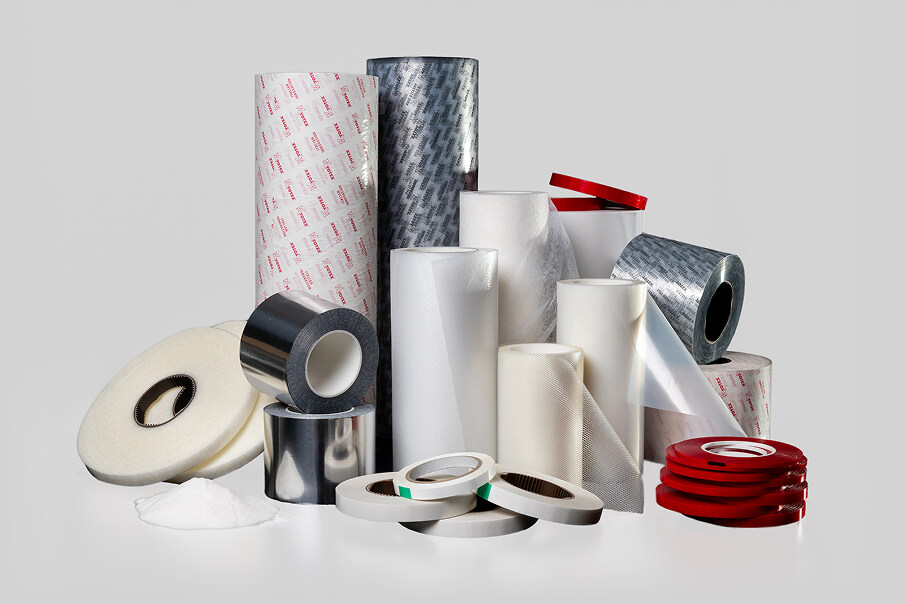
Kyotex's business unit for heat-adhesive products — low environmental impact, technologically advanced. Available as granules, powders, films, webs and nets, they adhere perfectly to the surface through the power of heat and pressure.
 k-ThermoKyotex® · ALC
Solid adhesive, activated by heat.
Where k-System is the pressure-sensitive answer, k-Thermo is the heat answer — the same house, ALC Tecnologie Adesive in Venaria Reale, and the same solvent-free discipline, tuned for lines that already run a press or a laminator.
Four chemistries, two principal forms. EVA/PO, TPU, Co-PES and Co-PA — each made as adhesive film or adhesive web, with mesh and powder where the line scatters rather than lays. Instyle Overseas holds the range for Indian factories.
The advantages of k-Thermo systems.
Three reasons factories move a bonding step from solvent to heat.
Technological
k-Thermo products are designed by ALC engineers working closely with materials experts — every aspect of the adhesive application examined, from the chemical bond to technical compatibility.
Integrated
The result of an integrated approach: high quality and excellent service. The range adapts to a wide span of materials and industrial sectors — starting precisely with footwear and leather goods.
Eco-friendly
Highly performing, but extremely mindful of environmental impact: every solution is designed to minimise waste and harmful emissions.
Available in India
Instyle Overseas holds the k-Thermo range for Indian factories — samples, trial support, and production rolls landed with customs and inland transport handled.
From Co-PA to Co-PES, through TPU and EVA.
For every need, the right adhesive is the right solution. Made as adhesive film, adhesive web, adhesive mesh or adhesive powder, each guarantees maximum performance for its bonding surface — and so an optimal result on the finished product.
Extremely versatile and economical, known for excellent adhesion on EVA foam and fabrics — widely used in footwear and leather goods, and one of the best-selling products on the market. Some formulations activate at particularly low temperatures, a real advantage on heat-sensitive materials. Polyethylene and polypropylene versions are made for industrial applications with higher melting points.
- Melting range
- 72–145 °C
- Best on
- EVA, leather, cotton, PES, fabrics
- Affinity
- Heat-sensitive materials
- Sectors
- Footwear · Leather goods
- Also as
- PE / PP for industrial use
Ideal for bonding PU foams, fabrics and leather. Low-temperature bonding capability laminates heat-sensitive materials without altering their properties, while high elasticity makes TPU the 'perfect adhesive' for soft-to-the-touch materials.
- Melting range
- 80–180 °C
- Best on
- PU foam, fabrics, leather
- Character
- High elasticity, soft hand
- Sectors
- Sportswear · Lingerie · Footwear
- Strength
- Low-temperature lamination
High bonding strength and exceptional resistance to plasticizers. Compliant with the VOC regulations of the automotive sector and, thanks to a wide operating temperature range, particularly suitable for bonding PES and PVC fabrics and other technical materials.
- Melting range
- 87–173 °C
- Best on
- PES, PVC, technical fabrics
- Resists
- Plasticizer migration
- Compliance
- Automotive VOC regulations
- Sectors
- Automotive · Technical textiles
High-performance heat-transfer adhesives offering excellent resistance to washing and chemical agents. They show strong adhesion on difficult fabrics and substrates and have a very wide melting range.
- Melting range
- 87–185 °C
- Best on
- Difficult fabrics & substrates
- Resists
- Washing, chemical agents
- Range
- Very wide melting range
- Sectors
- Apparel · Workwear · Footwear
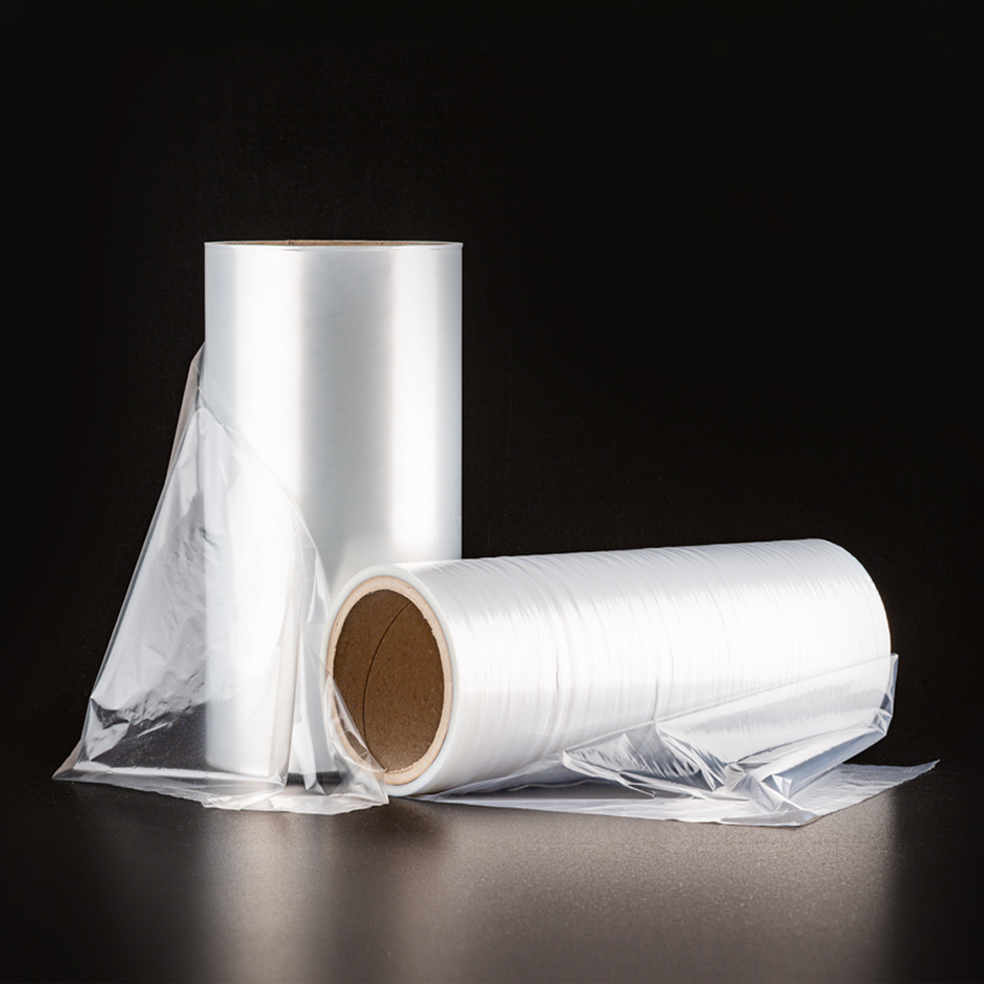
EVA / PO thermoadhesives.
Extremely versatile and economical, they are known for their excellent adhesion properties on EVA foam and fabrics.
Widely used in the footwear and leather goods industry, they represent one of the best-selling products on the market. Some formulations can be activated at particularly low temperatures, offering significant advantages in the processing of heat-sensitive materials — and for this reason they have a specific affinity with sensitive materials: leather, EVA, cotton, PES. Adhesives in polyethylene and polypropylene are also made for industrial applications, with higher melting points.
Melting range 72 °C – 145 °C.
- Best on
- EVA, leather, cotton, PES, fabrics
- Affinity
- Heat-sensitive materials
- Sectors
- Footwear · Leather goods
- Also as
- PE / PP, higher melting point
 * Photo for indicative purposes only.
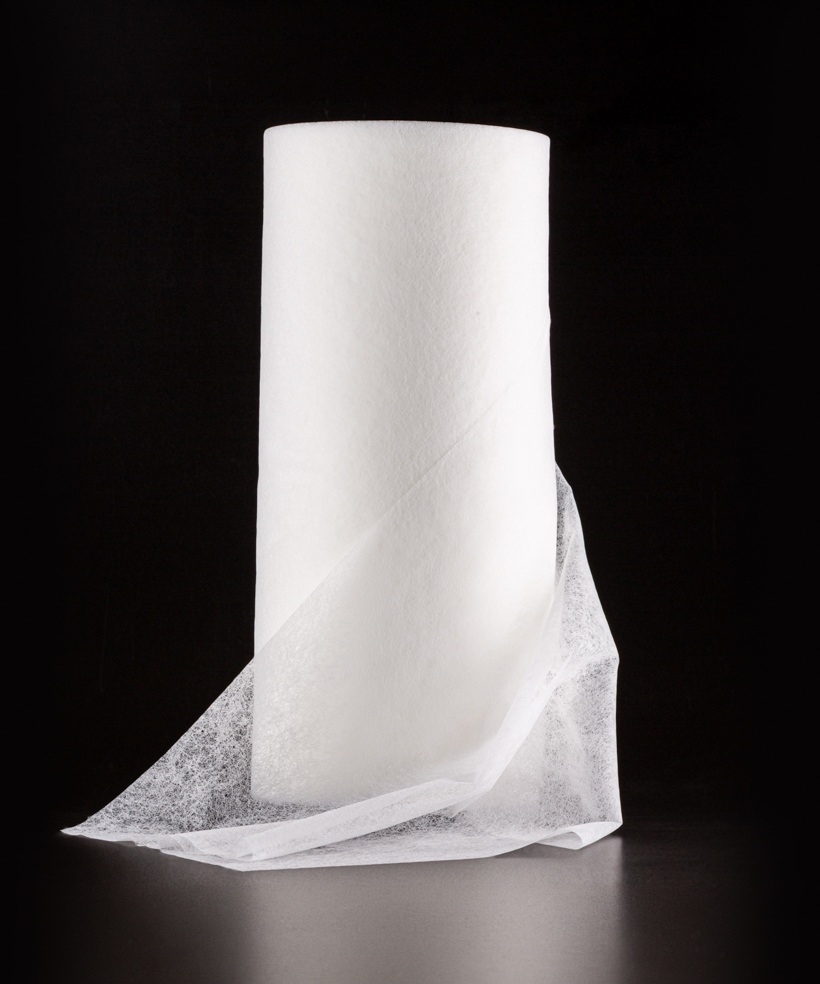
TPU thermoadhesives.
Ideal for bonding PU foams, fabrics and leather.
Low-temperature bonding capabilities allow the lamination of heat-sensitive materials without altering their properties. High elasticity makes them the ‘perfect adhesive’ for soft-to-the-touch materials such as sportswear and lingerie.
Melting range 80 °C – 180 °C.
- Best on
- PU foam, fabrics, leather
- Character
- High elasticity, soft hand
- Strength
- Low-temperature lamination
- Sectors
- Sportswear · Lingerie · Footwear
 * Photo for indicative purposes only.
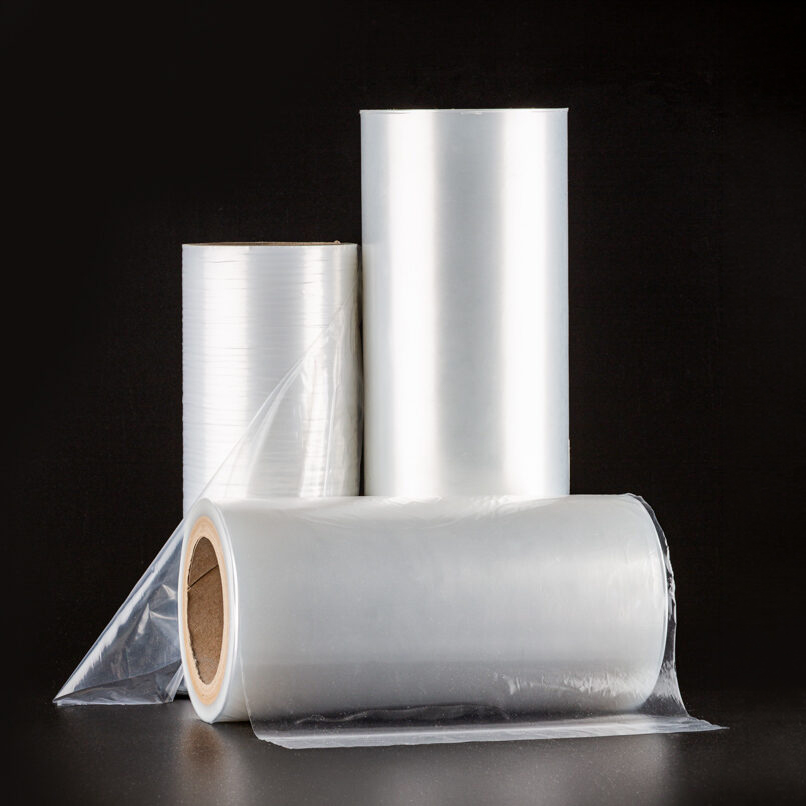
Co-PES thermoadhesives.
Appreciated for their high bonding strength and exceptional resistance to plasticizers.
Compliant with the VOC regulations of the automotive sector, they offer excellent resistance to plasticizers. Thanks to their wide operating temperature range, they are particularly suitable for bonding fabrics in PES, PVC and other technical materials.
Melting range 87 °C – 173 °C.
- Best on
- PES, PVC, technical fabrics
- Resists
- Plasticizer migration
- Compliance
- Automotive VOC regulations
- Sectors
- Automotive · Technical textiles
 * Photo for indicative purposes only.
Co-PA thermoadhesives.
Co-PA heat-transfer adhesives are high-performance products that offer excellent resistance to washing and chemical agents.
They exhibit strong adhesion on difficult fabrics and substrates and have a very wide melting range.
Melting range 87 °C – 185 °C.
- Best on
- Difficult fabrics & substrates
- Resists
- Washing, chemical agents
- Range
- Very wide melting range
- Sectors
- Apparel · Workwear · Footwear
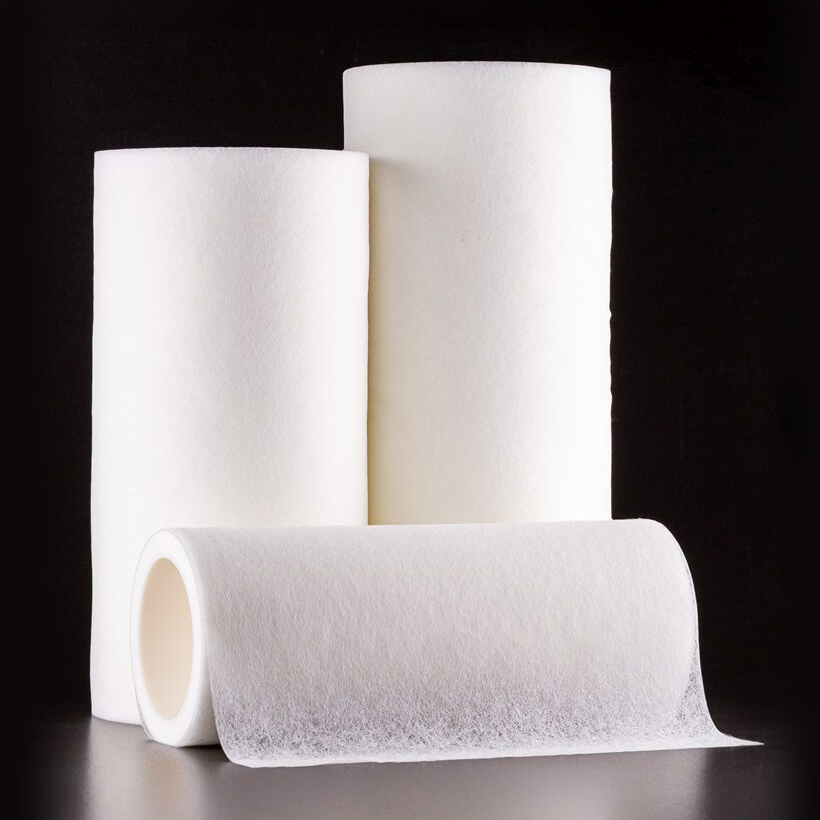 * Photo for indicative purposes only.
Film or web — common to all four.
Every chemistry above is made in both forms. The form decides the character of the bond: film seals, web breathes.
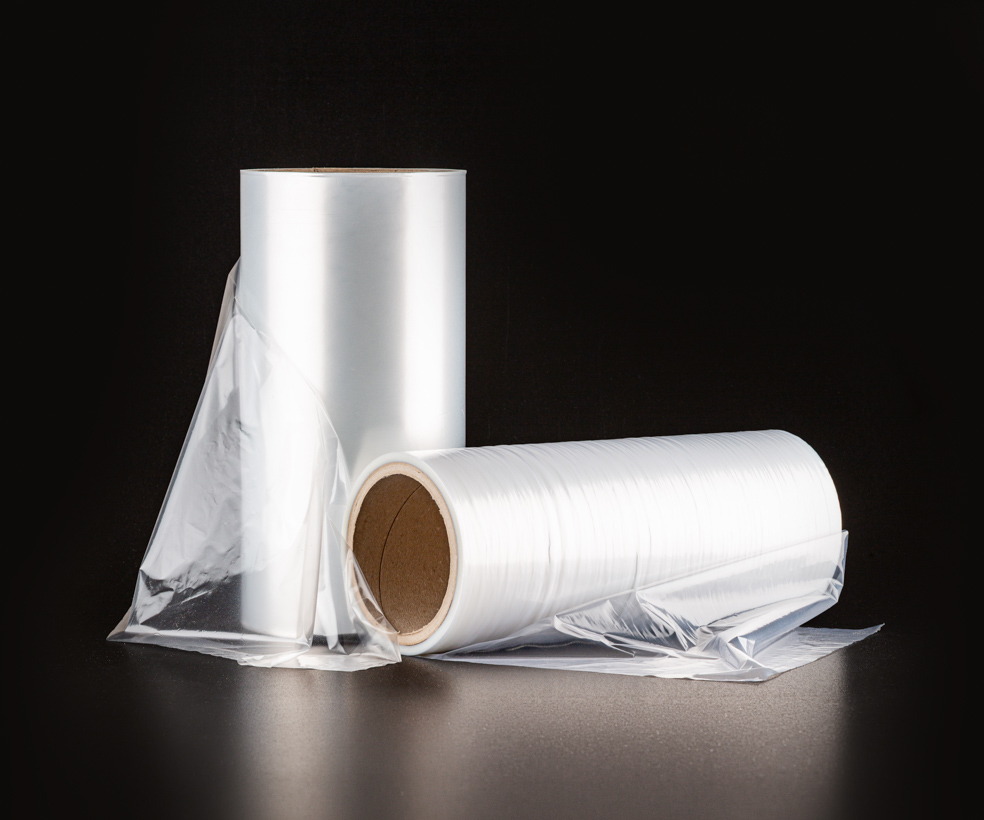
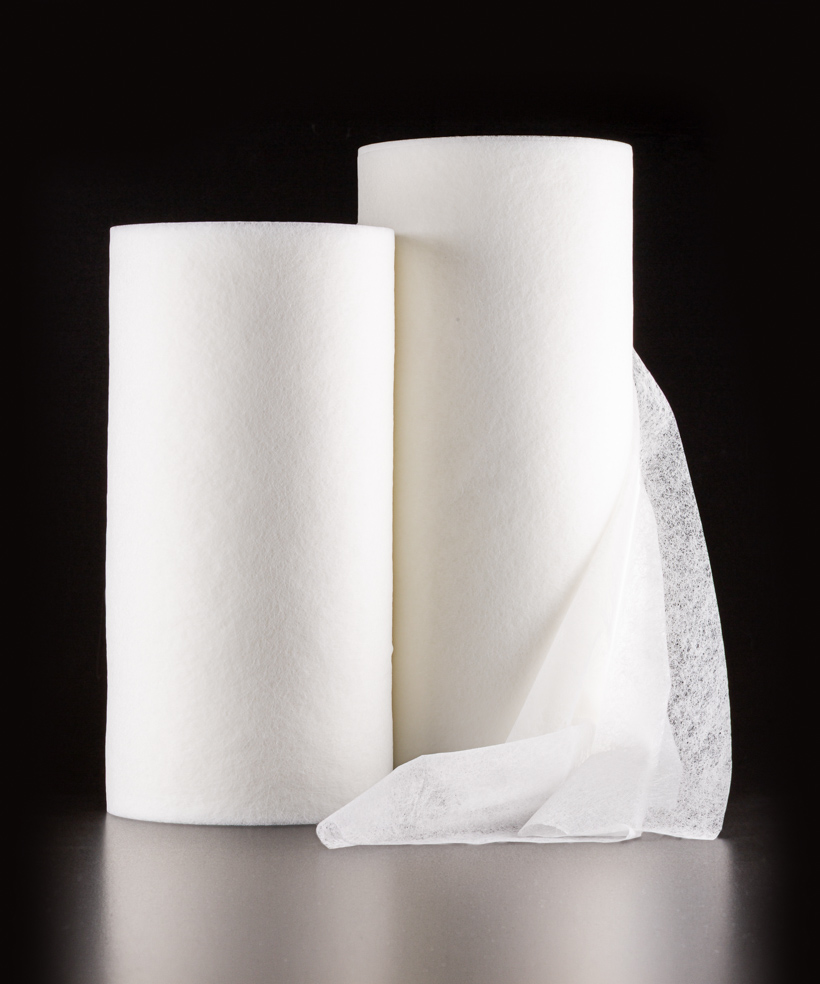
Adhesive film and adhesive web. Photos for indicative purposes only.
Beyond film and web the range is made in granules, powders and nets — for lines that scatter-coat rather than lay, and for decorative bonding where the adhesive must disappear into the fabric.
Start from the substrate.
Tell us the pair being bonded and the press temperature you can hold. The chemistry follows from there — and the numbers below go straight onto your spec sheet.
| What you are bonding | Why it is difficult | Chemistry |
|---|---|---|
| EVA foam, cotton, leather, PES | Heat-sensitive — the material moves before the adhesive melts | EVA / PO |
| PU foam, sportswear, lingerie | Needs elasticity and a soft hand after bonding | TPU |
| PES & PVC fabrics, automotive trim | Plasticizer migration and VOC limits | Co-PES |
| Washable garments, chemically exposed parts | Bond must survive laundry and solvents in use | Co-PA |
| Porous textiles, board lamination | Large, uneven surface — scatter rather than lay | PowderMesh |
Chemistry families
Melting ranges
Forms & supply
Film properties
Web properties
Compliance & documents
Match the film to your substrate.
Tell us both faces and your press temperature — we’ll send film, web, mesh or powder to trial.